Da Vito New Milton
Brand identity, copywriting and a website for Da Vito, a family-run Italian restaurant in New Milton — designed around the family, and built so they can run it themselves.
The brief
When Chef Vito and his family reopened Da Vito in June 2025, they had no website. You could find them by walking past, but not online — no menu to browse, no opening hours, and nothing to show the family behind the food.
They needed a brand and a website that felt like them, and one they could keep up to date without calling someone every time the menu changed.
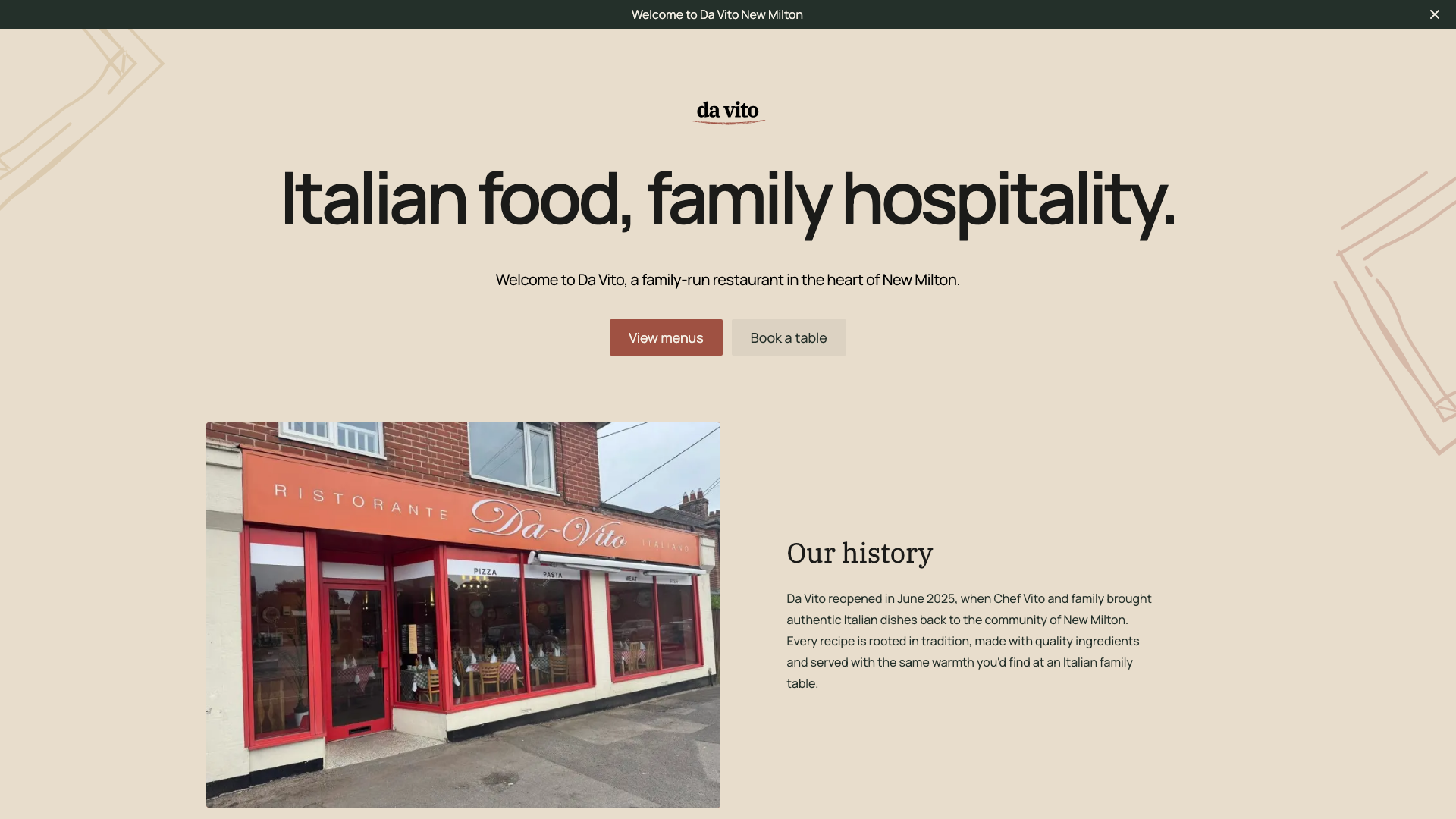
Starting with the family
Da Vito isn't a chain, and the brand needed to say so. I designed a simple "da vito" wordmark with a hand-drawn underline, a warm palette of cream, terracotta and deep green that echoes the red shopfront and the warmth inside, and loose hand-drawn line illustrations that keep it feeling personal rather than polished.
I wrote the copy to match — short, plain and warm — and put the family front and centre, with their story and photos of the people who'll be cooking for you.
A menu that's easy to read
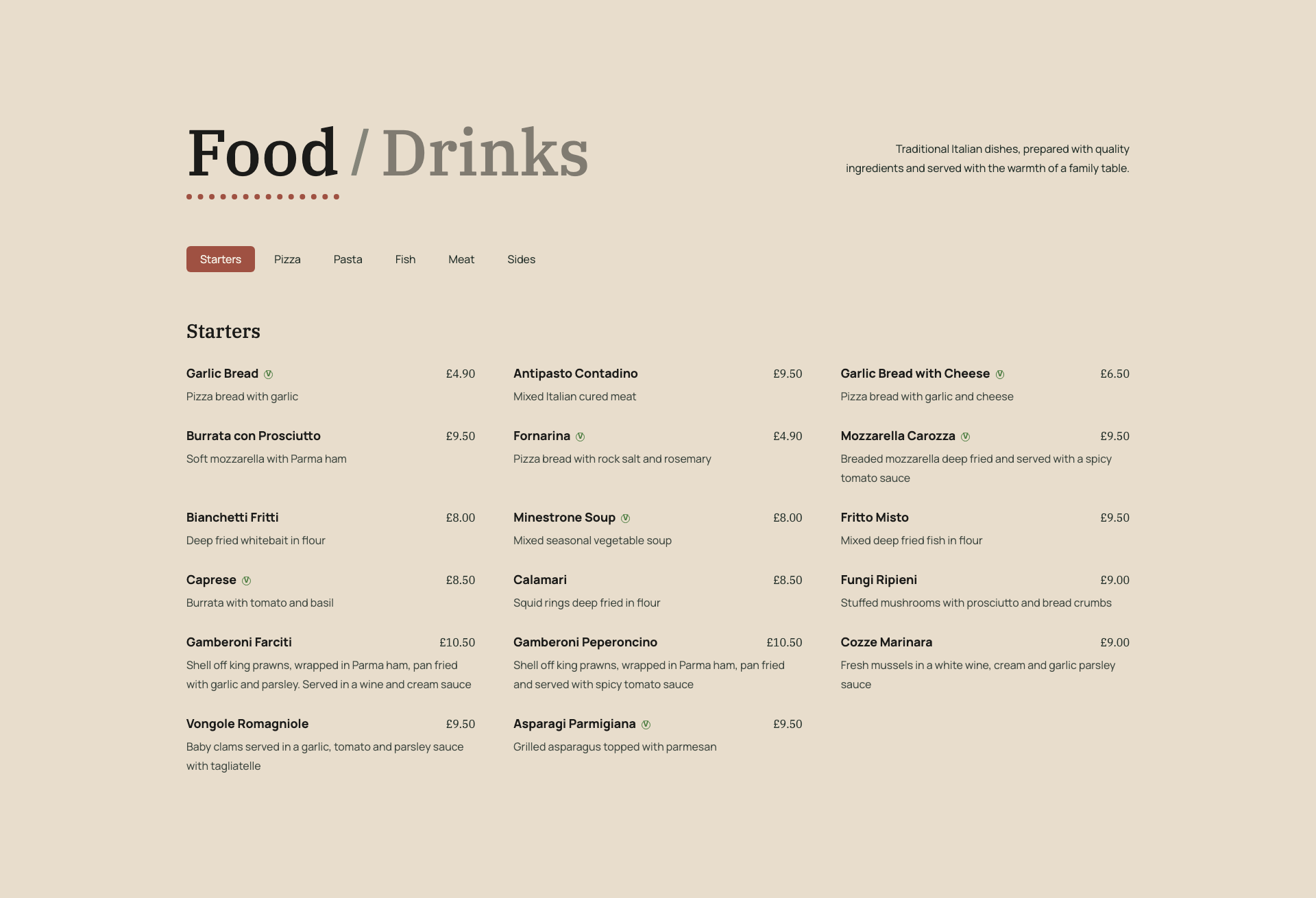
The menu is the main reason people visit a restaurant's website, so it got the most care. Rather than a PDF, it's built into the page: food and drinks are a tap apart, a section bar lets you jump straight to pizza or pasta and follows you as you scroll, and vegetarian dishes are clearly marked.
It reads well on a phone, works with a keyboard and screen reader, and can be found by search engines — none of which a PDF does well.
Keeping booking personal
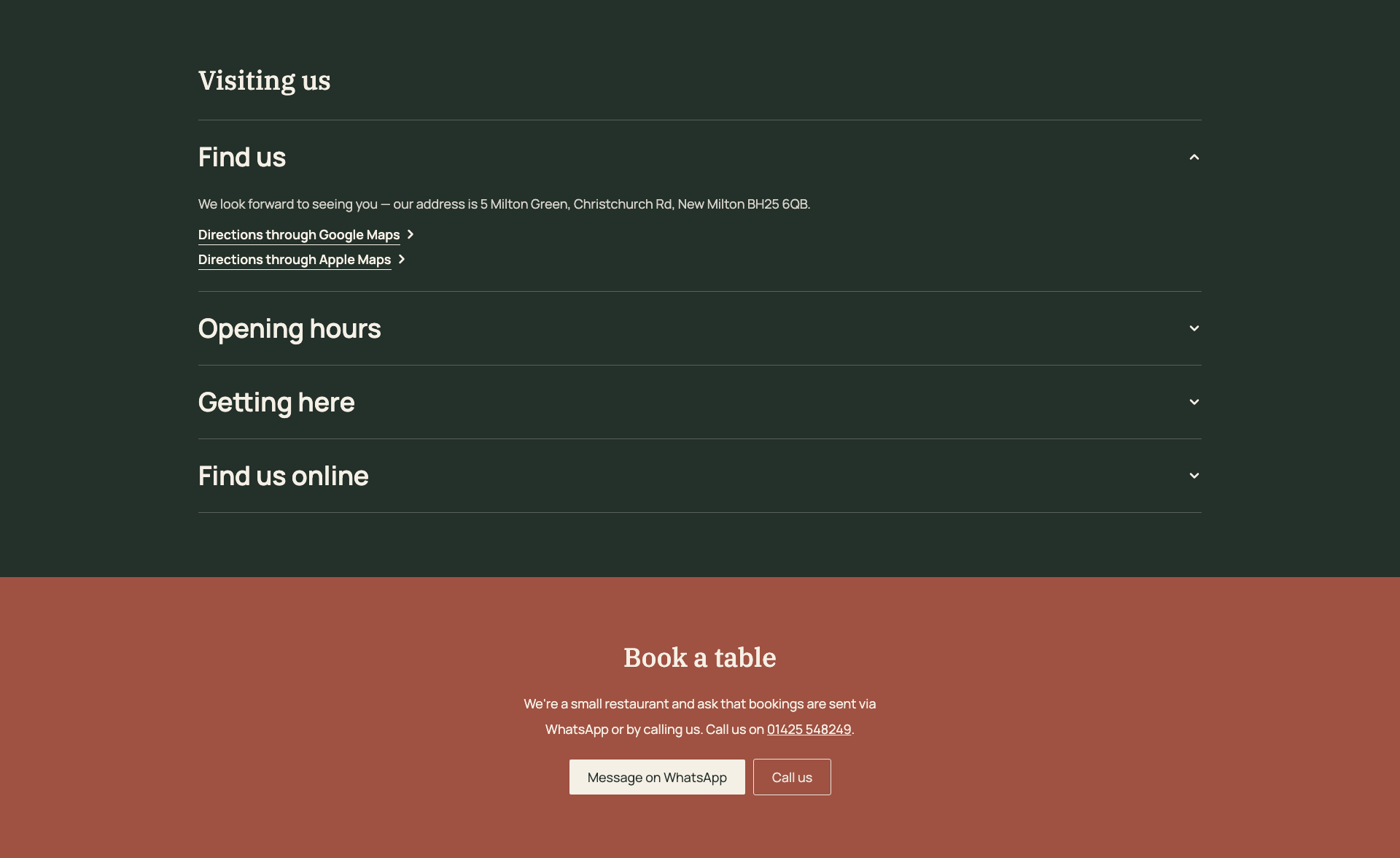
An online booking system would have been the obvious choice, but it isn't how Da Vito works. It's a small restaurant, and the family want to speak to their guests — to know who's coming and to look after a small room properly. So booking goes straight to them, by WhatsApp or a phone call, one tap from the top of the page.
Everything else a first-time visitor needs — directions through Google or Apple Maps, opening hours and getting here — is grouped in one place, so the page stays short without hiding anything.
Built for them to run
The site is managed through Sanity, a content management system I set up around the way the family work: one page to edit, one settings screen, and nothing they can accidentally delete. They can change dishes and prices, swap photos, and post notices themselves.
Notices come in two weights. A slim banner covers short, low-urgency news like a bank holiday closure, and a popup handles anything guests need to see before they browse — and can be scheduled to start and end on its own, so nobody has to remember to take it down.
Outcome
Da Vito now has a home online that feels like the restaurant: warm, family-first and easy to use. It's early days, but it's theirs to run — when the menu changes, the website can change with it, with no developer in between.